Nurse Residency Program
- Must have graduated from an accredited Nursing program (ASN, Diploma, BSN, MSN)
- An active Pennsylvania Temporary Practice Permit or RN license
- CPR certification
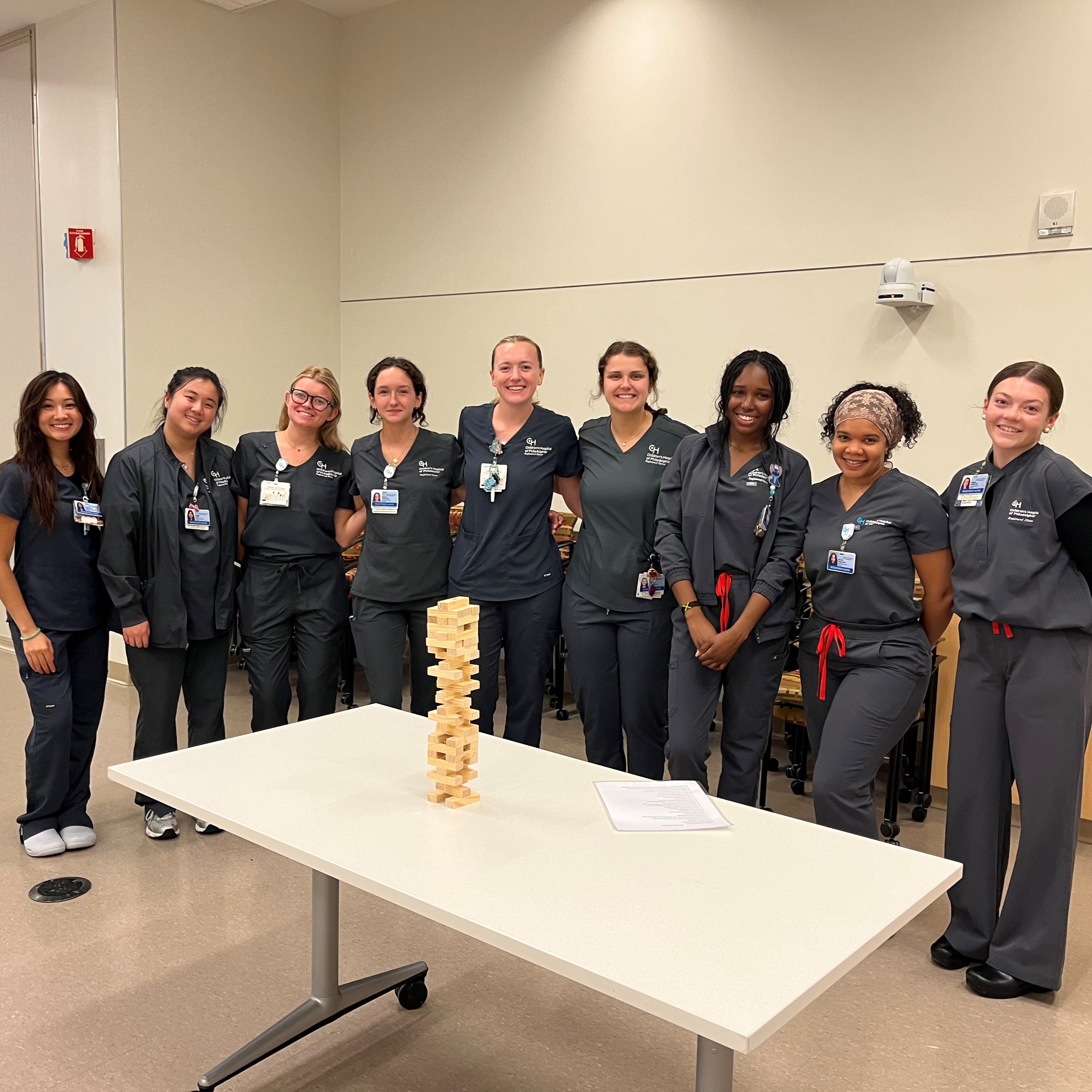
We offer opportunities in ICU, Medical/Surgical, and Emergency settings. Our Nursing Operations Centralized Rotating Cohort alternates throughout the 12-month residency.
Applications will open from May 18, 2026 through May 20, 2026.
The employee-based nurse residency program at The Children’s Hospital of Philadelphia is accredited by the Commission on Collegiate Nursing Education (http://www.ccneaccreditation.org).
CHOP is expanding to become a fully private-room institution! Ongoing projects include a new Patient Tower, renovations to Main Hospital, and more.
Our Hiring Process
Our Hiring Process
Positions are posted on our career site (and will appear on this page) throughout the year based on department needs.
Intensive Care Units
This 74-bed, blended acuity, multidisciplinary unit serves critically ill children who require the most advanced diagnostic and therapeutic services. You’ll work with advanced technologies, including high-frequency ventilation devices, sophisticated neurological monitoring devices, Extra Corporeal Membrane Oxygenation (ECMO), Peritoneal Dialysis, and Continuous Renal Replacement Therapy (CRRT).
Sub-units:
- PICU South: 24-bed unit with a mixed medical and surgical population. Patients require intensive care in a variety of medical subspecialties, including a specific subset of oncology receiving radioactive therapy.
- PICU Main: 26-bed unit with a mixed medical and surgical population. Patients require intensive care in a variety of medical subspecialties.
- PICU West: 24-bed unit predominately focused on neurocritical care patients. You'll also see patients that require pediatric intensive care.
Sub-units:
- NICU West 1: 17-bed unit that sees all surgical diagnoses (gastroschisis, congenital diaphragmatic hernia, omphalocele, tracheoesophageal fistula, etc.).
- NICU West 2: 24-bed unit focused predominantly on surgical diagnoses, but includes a mixed medical population.*
- NICU Central: 12-bed unit for surgical overflow, mixed medical population, and patients who need peritoneal dialysis therapy.
- NICU East: 24-bed unit with a mixed medical and chronic lung disease population (patients who require airway evaluations, potential trachs, etc.).
- NICU Northeast: 24-bed unit with mixed medical population, chronic lung disease population, the preemie core team, and the developmental care team. Extremely Low Birth Weight patients are cared for on this unit.
*Mixed medical populations include birth trauma, sepsis, prematurity, respiratory distress, persistent pulmonary hypertension of the newborn (PPHN), meconium aspiration, and more.
Medical/Surgical Units
The 12NW General Pediatrics Unit is a 16-bed inpatient medical unit dedicated to caring for general pediatric patients. This unit provides comprehensive medical care for children with common diagnoses such as asthma, pneumonia, viral illnesses, gastroenteritis, and dehydration.
Patients on 12NW typically present with three or fewer medical problems, and the average length of stay is approximately 2.5 days.
Staffing and Care Delivery
Patients on 12NW typically present with three or fewer medical problems, and the average length of stay is approximately 2.5 days.
Staffing and Care Delivery
- Average Nursing Care Hours: Each patient requires approximately 11 hours of nursing care per day.
- 80% of care is delivered by Registered Nurses (RNs).
- 20% of care is provided by Senior Nursing Aides or Nursing Students.
Patient Volume
The average daily census for the Medical Hospitalist Care Unit is 14.4 patients per day.
On Neuroscience unit we see a mixture of neurology & general pediatric patients. This unit is unique due to the Epilepsy Monitoring Unit (EMU) to diagnose new onset seizures. The neurology population includes but not limited to patients with; epilepsy, keto initiation, multiple sclerosis, Guillain Barre syndrome, transverse myelitis, encephalitis, optic neuritis, migraine, and neurosurgical patients. The general pediatric patient population includes but is not limited to; behavioral health, asthma, bronchiolitis, meningitis, feeding intolerance and cellulitis.
Our goal is to provide high-quality, patient and family centered care to all. We welcome nurses at all stages of their careers who share our passion for these values. Our unit has a proven track record of successfully integrating nurses into a fast-paced environment where high acuity, time management, and critical thinking are key to success. We are proud of our inclusive and supportive culture, where every team member is valued and empowered.
We would love for you to visit and experience the culture and atmosphere of our unit firsthand!
25% are technologically dependent. Most patients go home with 3-11 medications prescribed.
5E is a 22-bed unit that typically provides care for all-aged patients who no longer require intensive care monitoring in the Cardiac Intensive Care Unit (CICU). In addition, we care for patients from local subspecialties and the general pediatric population. The cardiac patient population transitioning from the CICU includes medical management and pre- and post-surgical care of patients with a variety of acquired and congenital heart defects.
This multidisciplinary team—including nurses, attendings, social workers, case managers, respiratory therapists, and Child Life specialists—partners on care management, nursing interventions, and discharge planning. The patient to RN ratio is typically 4:1.
Behavioral Health
Behavioral Health
Divided into child and adolescent units, our inpatient psychiatric program will serve a diverse group of youth ranging from 7 to 17 years old. Multidisciplinary teams include psychiatrists, psychologists, social workers, psychiatric nurses, behavioral health clinicians, creative art therapists, behavioral analysts, and teachers. Care focuses on patient safety, developing appropriate coping skills, improving social functioning, decreasing maladaptive behavior, and more.
Our Crisis Response Center (CRC) will be open 24/7, providing crisis triage, evaluation, support, and community-based resources that promote wellness and help children thrive at home, school, and beyond.
A unique opportunity to become competent in multiple subspecialties, our Nursing Operations Rotating Cohort allows you to select a track—Medical/Surgical or Intensive Care—and float between its units (see above) throughout your residency. Both tracks include the roadmap of residency seminars and orientation classes.
Questions? Contact Talent Acquisition Specialist Joshua Kim at kimj51@chop.edu.